How Your Birth Choices Can Shape Your Breastfeeding Journey
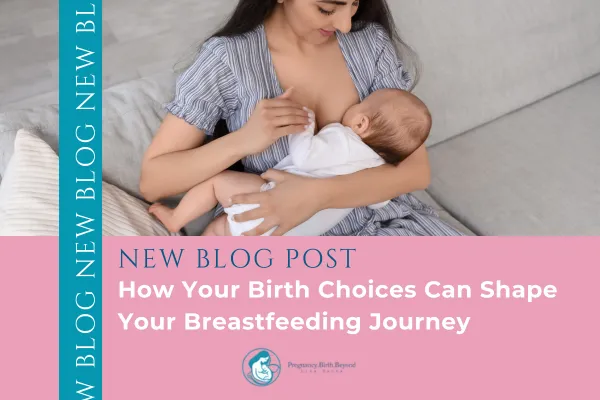
How Your Birth Choices Can Shape Your Breastfeeding Journey
by Lisa — Midwife, Health Visitor & Hypnobirthing Teacher at Pregnancy Birth Beyond
Birth, Breastfeeding & the Power of Oxytocin
Birth and breastfeeding are beautifully intertwined. Both are fueled by oxytocin — the incredible “love hormone” that not only brings your baby into the world but also supports milk flow and deep bonding in those early days.
As a midwife, health visitor and hypnobirthing teacher, I’ve seen how different birth experiences can shape the start of breastfeeding. Not in a limiting way — but in a way that helps you understand your body, adjust if things take time, and trust the process.
Every birth is unique, and so is every feeding journey. But being informed and supported can make a big difference in how confident and connected you feel.
How Birth Interventions Can Influence Breastfeeding
Labour and birth are powered by a delicate hormonal rhythm. When that rhythm is changed by interventions such as induction, medical pain relief, or caesarean birth, your oxytocin levels can sometimes take a little longer to settle into their natural flow.
Here’s how that might look — and what you can do to support your body afterwards.
Induction of Labour & Synthetic Oxytocin
When labour is started or strengthened with synthetic oxytocin (Syntocinon), your uterus receives the signal to contract — but this inhibits your natural production of Oxytocin. Your brain doesn’t get the same oxytocin “rush” that triggers endorphins, feelings of calm, connection and let-down reflex for milk.
This doesn’t mean breastfeeding won’t work — it may just need more time and stimulation. Extra skin-to-skin contact, frequent feeding and rest can all help boost natural oxytocin once baby is here.
Active Management & Syntometrine
If you had an actively managed third stage (where Syntometrine is given to help deliver the placenta), this can delay the rise of prolactin, the hormone responsible for milk production.
Your milk will still come in — it may just take a little longer. Continuing to feed or express frequently helps signal to your body that milk is needed.
Caesarean Birth
Following a caesarean birth, early skin-to-skin may be delayed, and pain relief or post-surgery recovery can sometimes make feeding feel trickier at first. However, with the right support, plenty of skin-to-skin, and time to rest, most families establish successful breastfeeding within days.
Research shows that even when breastfeeding starts slowly, those who receive encouragement and good guidance often go on to breastfeed for just as long as those who had straightforward vaginal births.
A Gentle Reminder: A Slow Start Is Still a Start
If your baby seems sleepy, feeds less often, or your milk takes longer to come in — please know this is very normal, especially after induction or caesarean birth. Be kind to yourself, your body hasn’t “failed”; it’s simply taking a bit longer to recalibrate after birth.
Remember:
Milk supply works on demand and stimulation — every feed or expression counts.
Skin-to-skin and cuddles raise oxytocin naturally.
Good support early on can make all the difference — reach out to your midwife, health visitor, or a breastfeeding peer support staff.
How Hypnobirthing Supports Breastfeeding
Hypnobirthing isn’t just about labour — it’s about understanding how your body’s hormones work together to support birth, bonding and feeding.
In my Midwife-Led Hypnobirthing Course at Pregnancy Birth Beyond, we explore:
How relaxation and breathing boost oxytocin and reduce stress hormones, these techniques can be used throughout your life not simply during birth.
How to make confident, informed choices about induction, pain relief and third stage management
How partners can create the right environment for support, calm and connection — whether at home, in hospital, or in theatre.
When you feel calm and empowered in birth and postnatally, oxytocin flows more freely — helping both labour progress and early breastfeeding.
Practical Steps to Support Milk Supply After Birth
No matter how your baby arrives, these simple actions can support your body’s natural rhythm:
Skin-to-skin contact — hold your baby close as often as possible.
Feed responsively — watch your baby’s cues, not the clock.
Stay nourished and hydrated — whole foods, oats, nuts and plenty of fluids.
Rest — your hormones need calm and recovery time to balance.
Ask for support early — never wait until you’re struggling.
When to Ask for Extra Support
Reach out early if:
Your baby feeds less than 8 times in 24 hours
You’re experiencing pain, cracked nipples or poor latch
Your baby is losing weight or has few wet/dirty nappies
You’re feeling tearful or anxious about feeding
In Northern Ireland, there are Infant Feeding Leads, Peer Support Volunteers, and local breastfeeding groups available through each Health Trust. You can also explore resources like Boobing It and Breastfeeding in the UK - Baby Friendly Initiative UNICEF Baby Friendly for practical guidance.
Final Thoughts
Your birth experience can influence the start of breastfeeding — but it never defines the outcome.
With knowledge, kindness and support, your body and baby will find their rhythm.
Every feed counts. Every cuddle builds connection.
And every small step towards confidence is a big step towards calm.
💛 You’re doing beautifully.
Learn More & Prepare for a Positive Birth
Start your journey with confidence — download your FREE Birth Preparation Guides, including:
Birth Plan Template
Hospital Bag Checklist
Pregnancy Relaxation Audio
📍Read other blogs in relation to pregnancy and birth from Pregnancy Birth Beyond – Midwife-led Hypnobirthing in Co. Down, Northern Ireland
👉 digital.pregnancybirthbeyond.co.uk/blog
🤰Find out more about my midwife led hypnobirthing courses and book your place to prepare for an informed, calm and confident birth Pregnancy.Birth.Beyond - Co.Down, Northern Ireland


